 Click the arrow and "Blue Font" to follow us!!
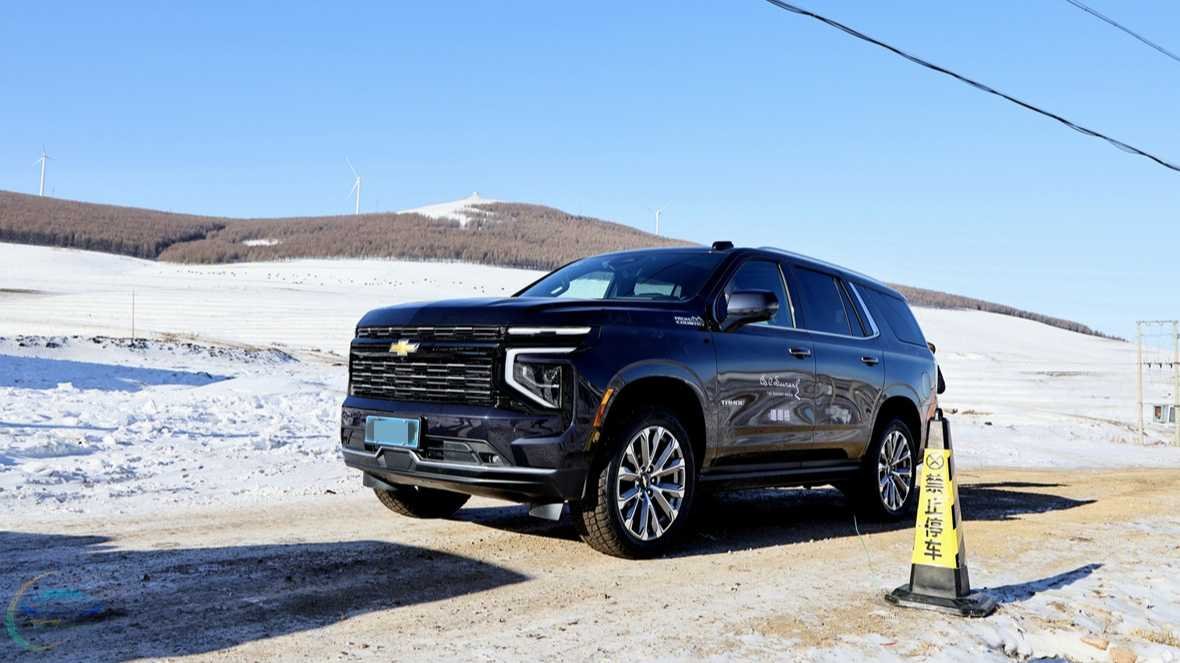
Activating Hill Descent Control, the vehicle began creeping downhill along the snow slope at 5 km/h. At that moment, several passengers in the rear seats raised objections: "This slope is too steep, let's take the gentler slope beside it instead..." Joining the 2025 TAHOE from Duolangge for the New Year was a thoroughly enjoyable experience: only after trying it do you discover that the TAHOE is not just about being "big."
Among the customers who have already placed orders, some had originally planned to buy an Alphard, while others intended to choose a hardcore off-road vehicle—seemingly at odds with the TAHOE's positioning. So why did they make such a choice?

Overwhelming Presence That Crushes Rivals
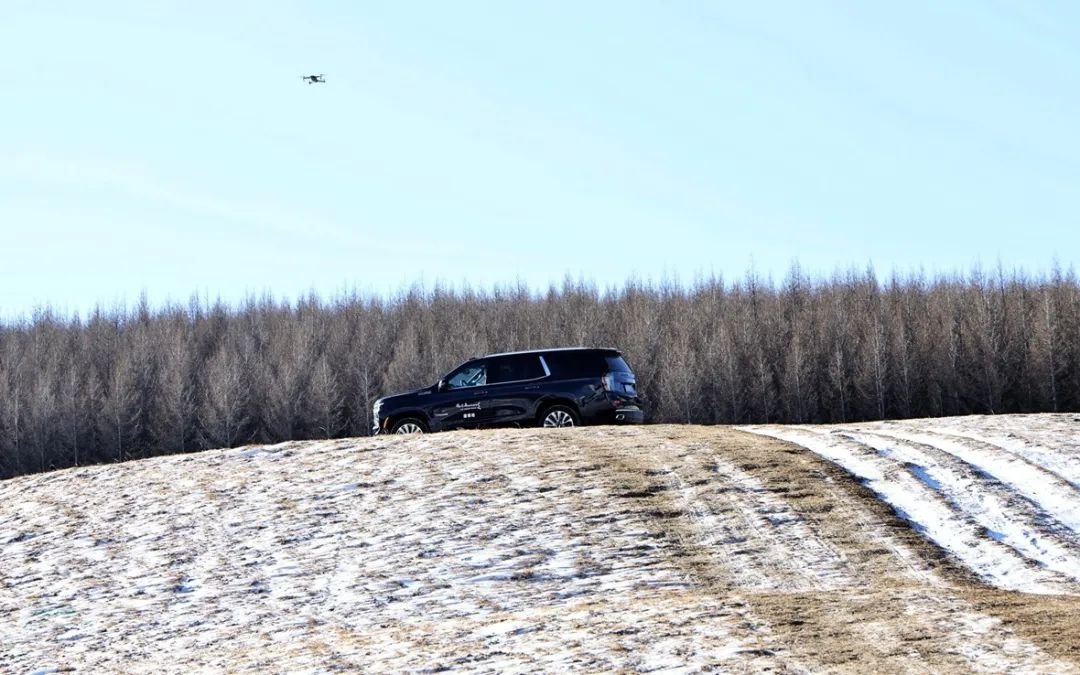
Chongli in Zhangjiakou was originally a ski resort, making it a great place to drive and play in the snow. But driving the TAHOE up a snowy mountain was not part of the plan. The 2025 TAHOE test drive route covered highways, provincial roads, country roads, and icy, snow-covered mountain roads.
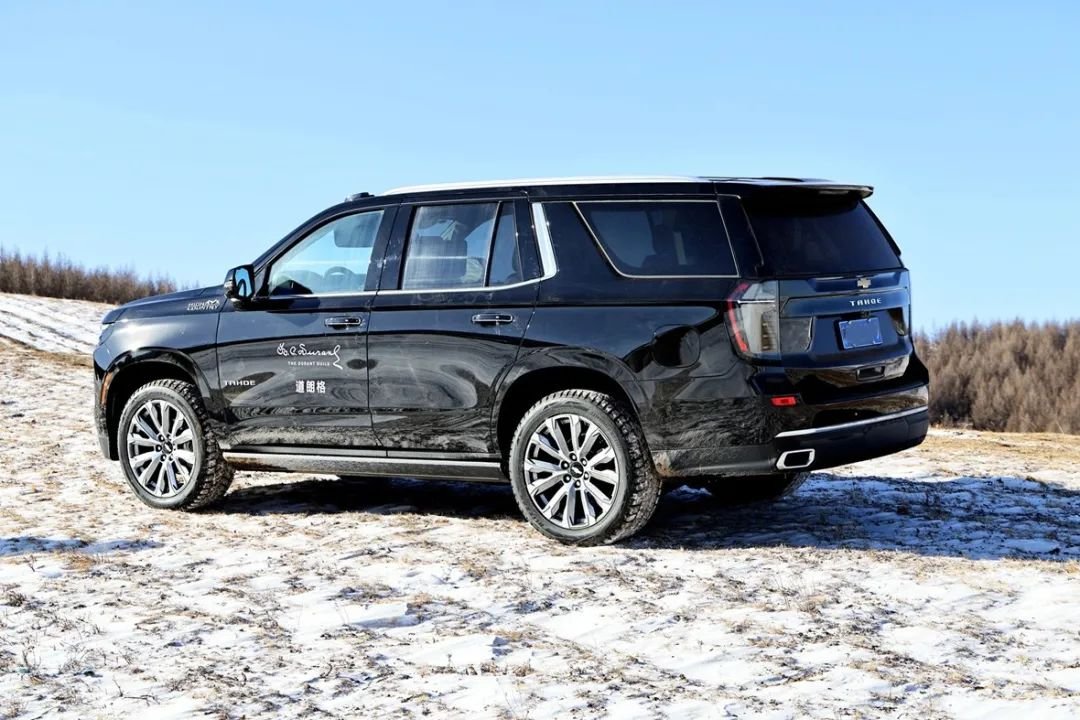
As a genuine American full-size SUV that has sold well in the U.S. for over 30 years, with cumulative deliveries of 3.5 million units and a 27% market share in its segment, the TAHOE is essentially the short-wheelbase version of the "SUV patriarch"—the Chevrolet SUBURBAN. Its body dimensions reach 5,382×2,058×1,940/1,890 mm (after air suspension lowering), placing it alongside the GMC YUKON unveiled by Duolangge at the Guangzhou Auto Show as the largest SUVs currently available in China.
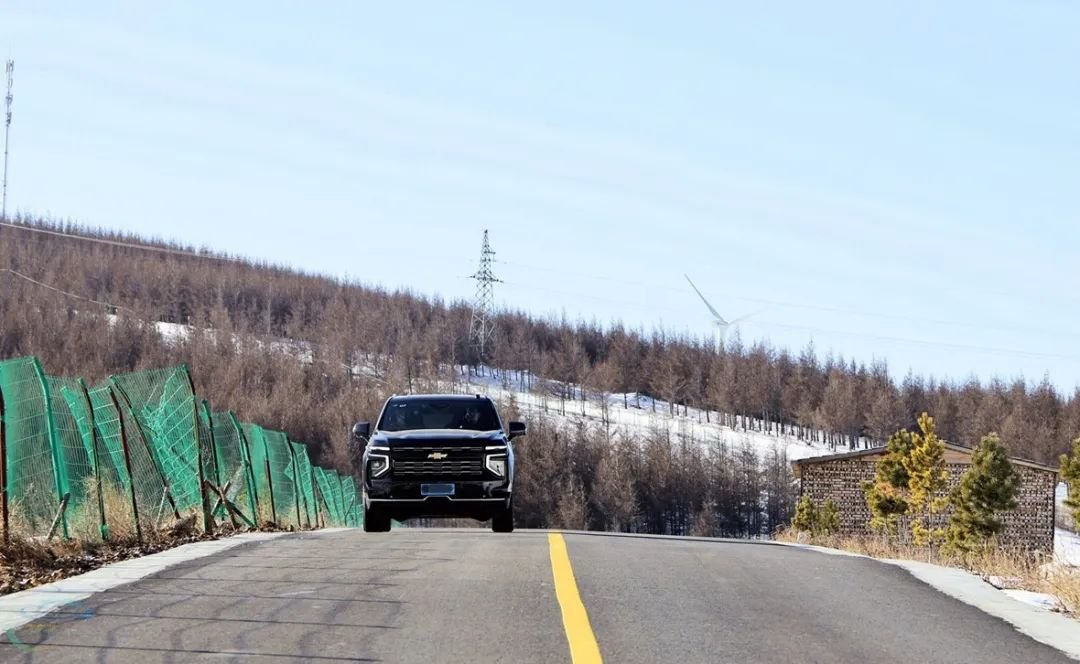
Saying "largest" may not mean much to most people. During the test drive, we happened to encounter a large truck transporting wind turbine blades. Sitting in the TAHOE's driver's seat, the sightline was only slightly lower than that of the truck driver... The TAHOE's size advantage doesn't just provide a higher and wider field of view—or a commanding, look-down-upon-everyone feeling on the road—more importantly, it delivers a sense of safety that other vehicles simply cannot match.
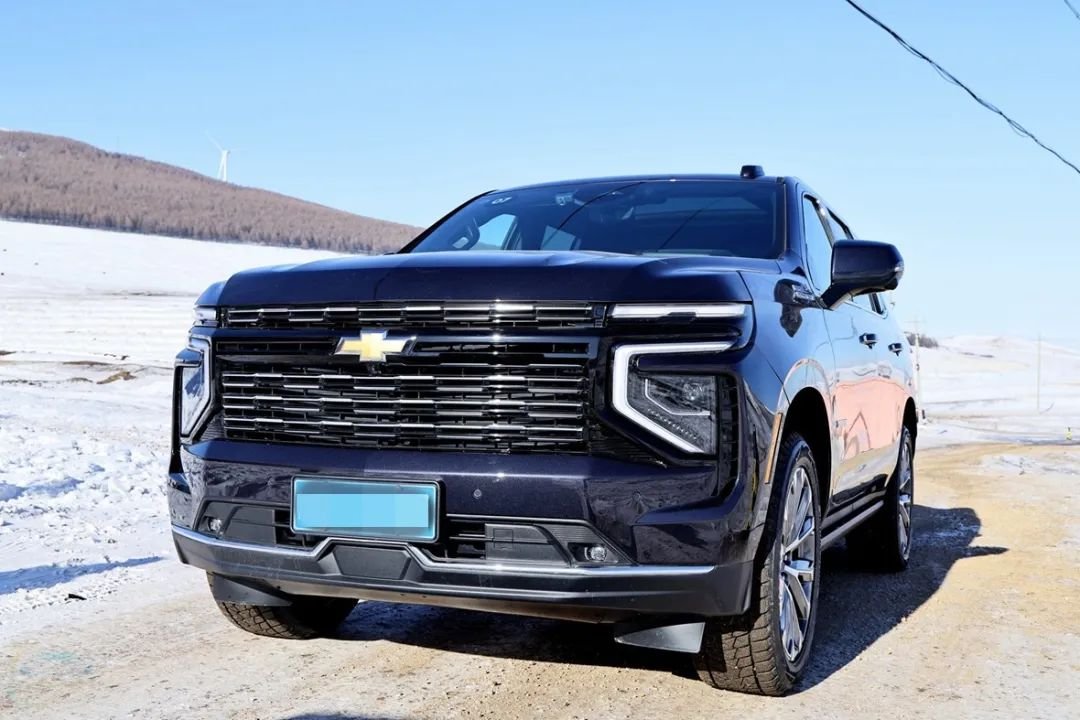
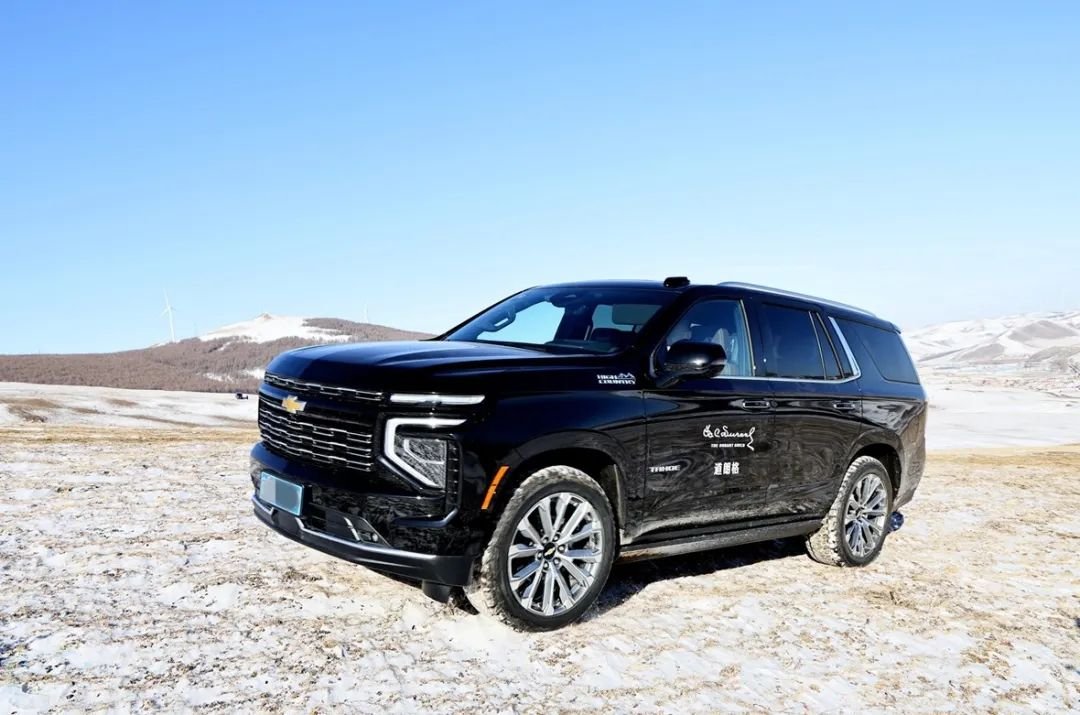
The originally bold, pure American square-jawed front-end design, combined with the tall body, gives the TAHOE an imposing presence and overwhelming sense of safety. The ultra-wide, open front fascia, paired with the new Chevrolet family-style dual-C headlights, the High Country badge on the body sides, the sculpted rear, and the shark fin on the hood—all contribute to a sense of luxury and refinement. It's like walking down the street next to a tall, muscular boyfriend—that sense of security is unmatched by other vehicles. In fact, the TAHOE adopts body-on-frame construction with ultra-high body rigidity, and the engine hood, doors, and tailgate use 6000-series aluminum alloy, so even in a real accident, it physically crushes the competition.

A "Big Guy" That Drinks 92-Octane Gasoline
Online, the TAHOE's most criticized aspect is its powertrain: it's equipped with GM's TurboMax 2.7T variable-cylinder turbocharged engine, producing a maximum power of 223 kW and peak torque of 500 N·m. It indeed doesn't carry the American version's 5.3-liter or 6.2-liter V8 engine, but this engine is actually also made in the USA. Besides powering the TAHOE and GMC YUKON, in the U.S. it also powers the rugged Silverado and Colorado pickups, as well as the performance-oriented Cadillac CT4-V, and has won unanimous praise from American users.
Actually, as I stepped on the electric side steps and settled into the driver's seat, I was a bit nervous about this engine—not because I worried about insufficient power, but because I expected to lose the familiar, deep V8 engine growl. But after ignition, I found that concern unnecessary—the sound may indeed not be as deep as a V8, but it's better than a host of other vehicles at the same price point, including V8 models sold domestically. From power performance to engine note, they're actually no stronger than the TAHOE's engine. Especially in the initial acceleration phase, the TAHOE paired with a 10-speed high-performance automatic transmission is even quicker than SUVs under 5 meters in length. The official 0-100 km/h time is 8.5 seconds, and in practice the power feels more than ample—output performance, even if slightly below a V8, at least surpasses many V6 powertrains.
By contrast, more people actually need to press harder on the brake pedal: the TAHOE's curb weight exceeds 2.6 tons, and when fully loaded on a highway weigh station, the gross weight reaches 3.2 to 3.6 tons, so braking feels slightly sluggish.
Throughout the entire test drive, no one worried about the TAHOE's power. On the contrary, everyone cared more about its ability to "eat coarse grain"—it only needs 92-octane gasoline. The 10-speed high-performance transmission, when driving in Sport mode on the highway, still maintains strong stability and comfort in the TAHOE. The luxurious and imposing exterior, the spacious 2+2+3 theater-style cabin, combined with superior quietness and comfort—this is the core reason why users who originally planned to choose the Alphard switched their orders to the TAHOE. But the difference is that an MPV's inherent safety performance simply cannot match this American full-size SUV.

"Chinese-Style" Smart Technology
When the TAHOE is parked, the air suspension automatically lowers the body height by 50 mm. Whether interpreted as a welcome mode or a luxury touch, this design, combined with electric retractable side steps, allows relatively petite women to enter and exit the cabin more easily. On the other hand, despite the high seating position, the TAHOE's seat and pedal design is very scientific—even with small size-34 feet, one can still keep the heel as a pivot to alternately control the accelerator and brake pedals. It's worth noting here: many vehicle designs don't consider women's seating posture and pedal control convenience, forcing some drivers to control pedals in incorrect ways—which is exactly how pedal misapplication accidents occur. From the pedal and seating design, one can see the TAHOE's "refinement within ruggedness"—a good car is one that suits people of different body types.
In addition, the American full-size wide center armrest can reduce driver fatigue, with elbow height perfectly matching the center armrest. The seemingly thin and squarish seats and headrests offer excellent wrapping support. Especially the headrest—though it looks a bit "hard"—is positioned exactly at the occipital bone, allowing the head to be completely relaxed. Among several luxury cars, I currently highly recommend the headrests of the Mercedes series, the TAHOE, or the YUKON—only after trying them do you know what proper support feels like.
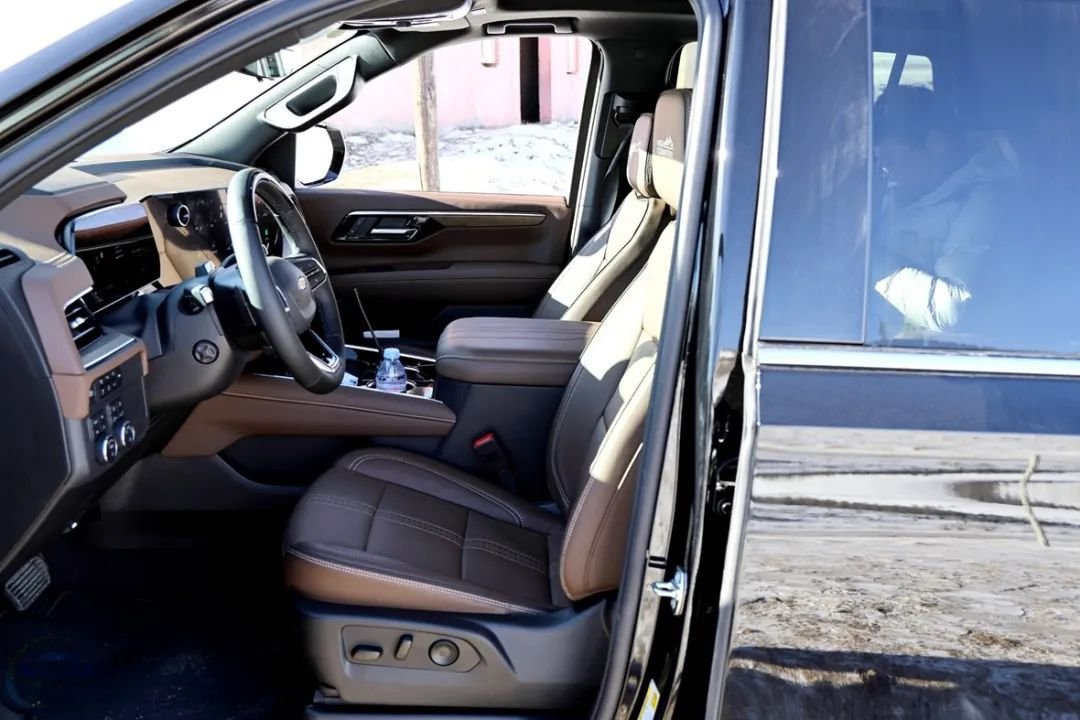
Although produced at GM's U.S. factory, when entering China, Duolangge's vehicles undergo not only adaptations for Chinese traffic regulations but also focus heavily on intelligent connectivity technology: the TAHOE features the all-new VCS intelligent cockpit system, equipped with a 15-inch full-color HUD head-up display and an 11-inch + 17.7-inch dual-screen setup, powered by GM's exclusive 8195 chip (1.4 times the computing power of the 8155 chip), supporting Baidu intelligent voice. In addition to multiple wake-up methods and voice packages available as options, it also supports navigation, multimedia, air conditioning, and other function queries, as well as voice interactive chat... It also comes with iQIYI, Kuwo Music, and various other applications. The richness of features and the experience are as smooth and fluid as domestic new energy vehicles.
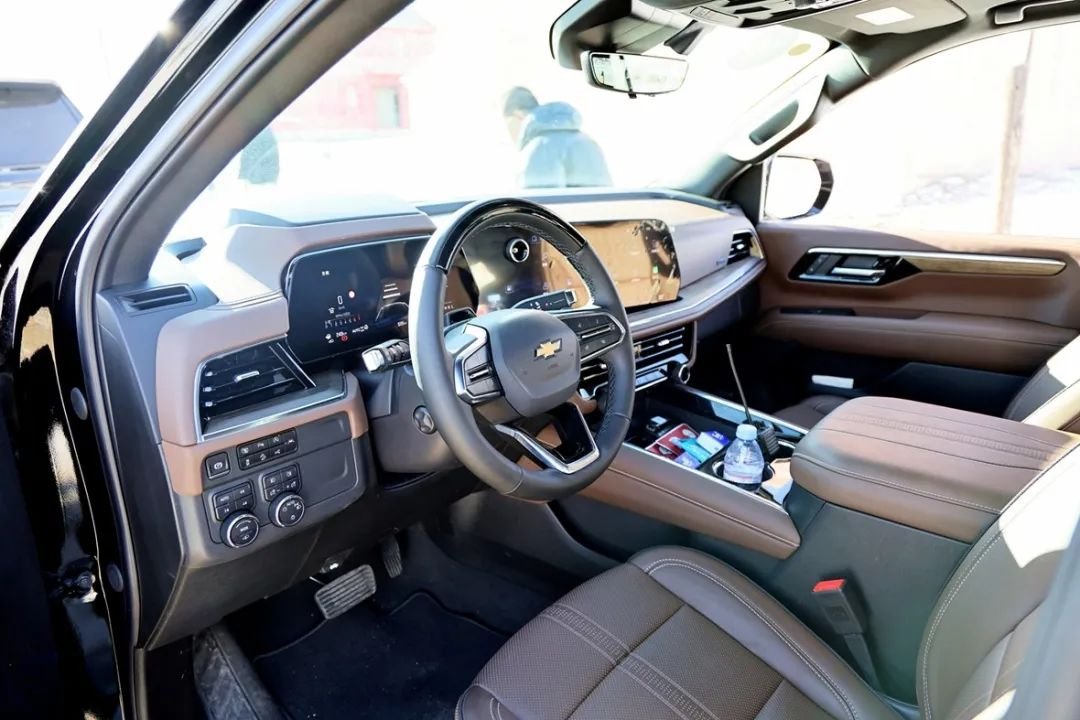
Worth mentioning is the Super Cruise advanced driver assistance system equipped on the TAHOE. On the highway, I specifically activated the smart driving function. The Super Cruise system includes over 20 intelligent driving assistance systems, including adaptive cruise control (ACC), lane centering assist (HOLCA), instructed lane change assist (ILC), hill start assist (HAS), automatic lane change assist (ALC), full-speed range automatic emergency braking (AEB), low-speed congestion assist, cross-traffic alert with emergency braking, and automatic parking assist (APA), etc.—completely on par with the highway NOA of domestic new energy vehicles. The slight difference is that the TAHOE features steering wheel and seat alerts—when risk approaches, the TAHOE's warnings offer two more direct methods than other vehicles.

Off-Road Capability on Par with a Wrangler Sahara
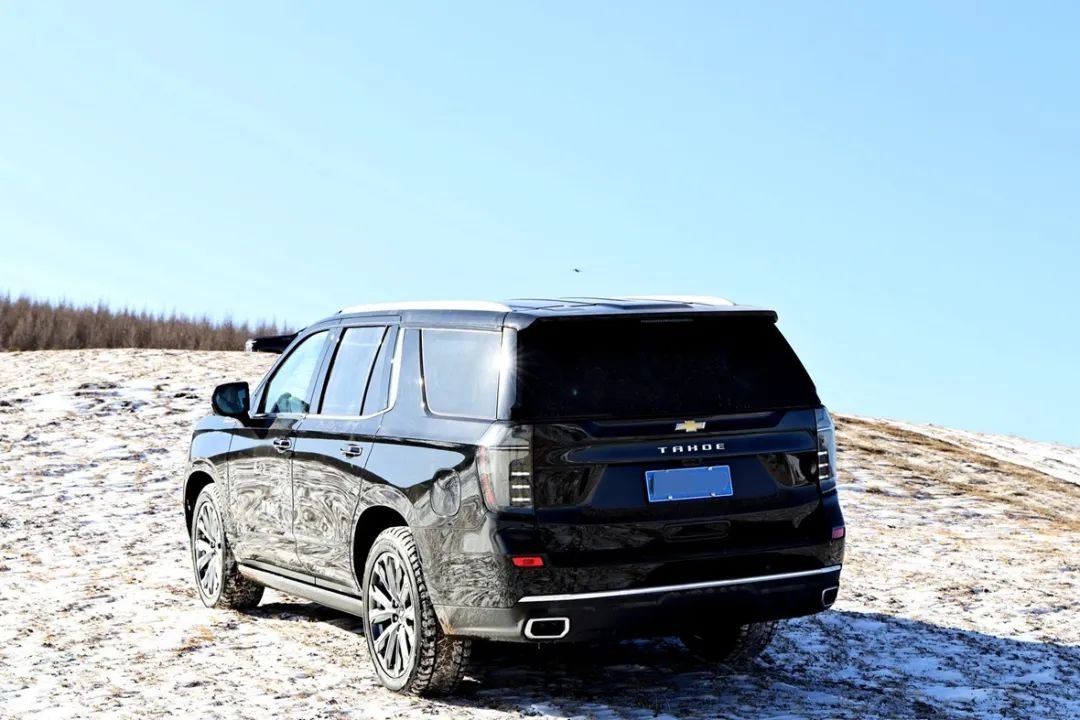
In fact, the TAHOE's all-around capability is something luxury MPVs cannot match. In terms of off-road performance, the TAHOE is fully worthy of the "hardcore" label: facing the snow-covered mountains of Chongli, the TAHOE showed almost no fear. During the mountain climb, we happened to encounter a lifted, modified Wrangler. Perhaps because the driver was in their own beloved vehicle, the climb seemed even more laborious than the TAHOE's.
With its body-on-frame construction, the TAHOE adopts a front double-wishbone and rear multi-link independent suspension combination, paired with an intelligent part-time four-wheel-drive system and an mLSD rear axle limited-slip differential. In low-speed four-wheel-drive mode, the two-speed transfer case can multiply torque by an additional 2.72 times, providing stronger escape capability. Admittedly, longer-wheelbase "big vehicles" are slightly more challenged on off-road sections than short-wheelbase models, but in reality, the TAHOE's off-road capability—when facing snow that has already bottomed out and steep mountain slopes—delivers greater confidence through easier handling.
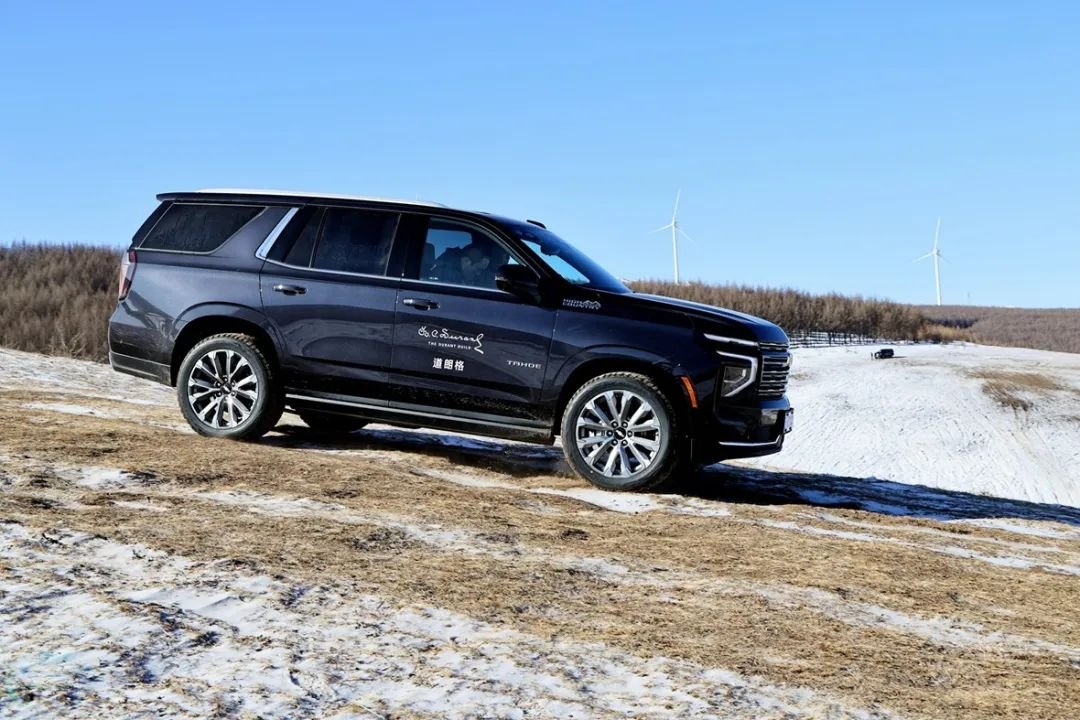
For "ice skating" and "snow mountain climbing," the TAHOE test vehicles were all fitted with snow tires. However, on highways and urban roads, the snow tires did not produce the expected vibration and tire noise: firstly, the TAHOE is equipped with four-wheel adaptive air suspension, which can actively lower the body height by 20 mm at highway speeds to reduce wind resistance. More importantly, the key weapon is the MRC electromagnetic induction shock absorbers—unlike the commonly known CDC continuously variable damping shocks, MRC uses magnetorheological fluid technology, utilizing the properties of magnetorheological fluid to change fluid viscosity and thereby adjust damping stiffness. Its millisecond-level response efficiency is 10 times faster than CDC.
With four-wheel adaptive air suspension paired with MRC electromagnetic induction shock absorbers that scan road conditions 1,000 times per second, the TAHOE can easily handle various road bumps and different terrains. Even on off-road sections, it still provides a more comfortable and stable ride.
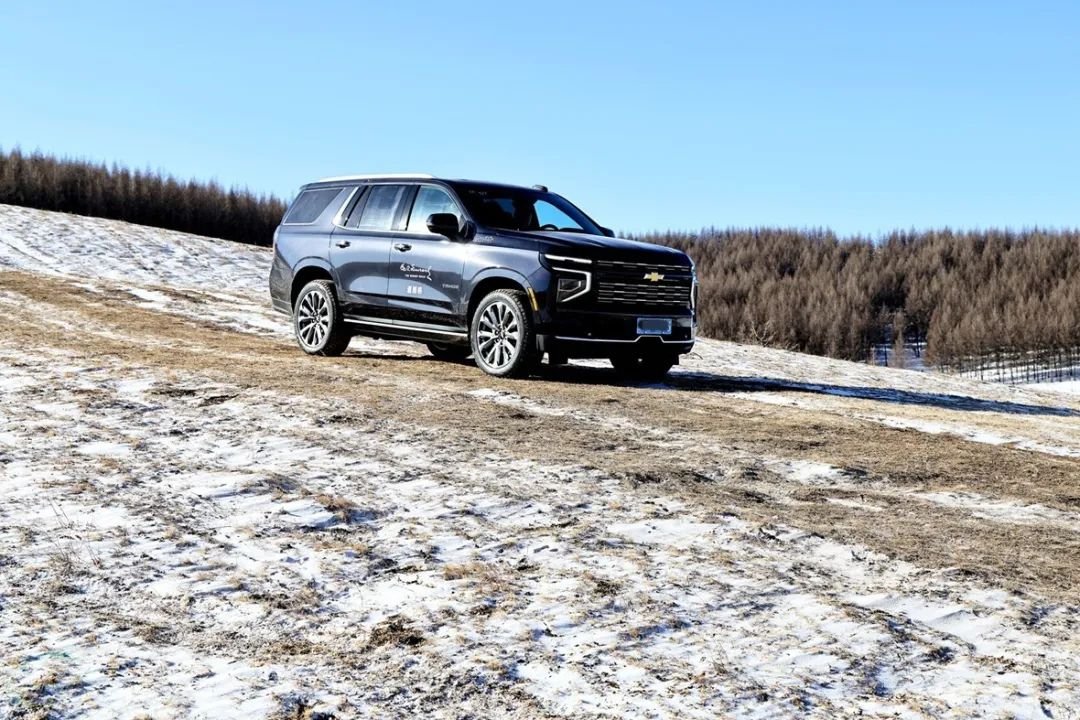
In addition, the TAHOE features a three-zone independently adjustable automatic climate control system, high-efficiency air conditioning filter, ultra-large panoramic sunroof, third-row power-folding/reclining seats, and an ultra-large variable cargo area (722 liters with all seats upright, up to 3,480 liters maximum). It also comes equipped with heated/ventilated seats, wireless charging pad, streaming media rearview mirror, Bose CenterPoint 10-speaker surround premium audio system, hands-free sensor-activated power tailgate (no foot kick needed)/separately opening tailgate window glass. The High Country edition adds electric hidden side steps, 22-inch large wheels, real wood interior trim, exclusive badges, and perforated leather seats and other luxury equipment.
Whether in terms of size, space, functionality, or in comparing configurations and luxury, the 2025 TAHOE possesses very unique advantages. Although during the test drive, a media colleague said this is "buying a GLS at the price of a GLE," in reality even the GLS is a size smaller than the TAHOE. Only after actually experiencing it will you have this sentiment—this is the true all-around vehicle!

Author: Liu Jungang